Chalmers Johnson, influential scholar and critic of US foreign policy, dies at 79

Some 20 years ago, I was a visitor at the Graduate School of International Relations and Pacific Studies on the U.C. San Diego campus. My office was across the hall from that of Chalmers Johnson. This was just before he did something that all too rarely happens in academia – he walked away from the field of political science because he saw the malicious influence of narrow rational choice theory.

A decade before 9/11 he lamented the deterioration in qualitative analysis and area studies that “rat choice” had caused in the field. In part this was linked to a wider problem: an obsession with quantitative and empirical analysis in the social sciences generally.

His perspective influenced my approach to human rights theory expressed in this review essay on the impact of realism on human rights.

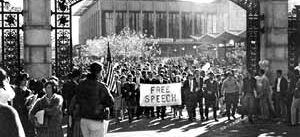
More well known is Johnson’s transition from a fairly conservative figure – one who was known for an occasional crude and politically incorrect joke when he was on the Berkeley faculty and served as an advisor to the CIA – to a bold and provocative theorist of the left, strongly critical of global U.S. military power.

Chalmers Johnson obituary: Chalmers Johnson, influential scholar, dies at 79.

“The Big Fail” – a legal black hole in the economy

Adam Levitin explains why the legal problems at the heart of the real estate crisis may end up making the last three years look like a speed bump.

The problem is that our banks turned themselves into designers of loans that they then were supposed to have sold off in packages to outside investors. Now that that homeowners are failing to pay their mortgages it turns out the banks may not have ever really transferred the mortgages as they promised.

So who is going to have to cover the losses now?

Here is one tantalizing clip:

The banks are in serious trouble if there are widespread securitization fails. If the loans weren’t transferred to the securitization trusts, then they are on bank balance sheets, which means that (1) the losses on the loans are the banks (to be sorted out with the investors), and (2) the banks need to be holding capital against the loans that haven’t gone into foreclosure.  Depending on the scale of the problem, the banks might not have enough capital to cover the securitization fails….

The Big Fail – Credit Slips

“Putting the Brakes on the GM IPO Fervor”

One of the most celebrated IPO’s in recent business history will likely be completed tomorrow. Underwriters bought all the shares on offer from GM today and will resell them to individual and institutional investors over the next few days.

But the Wall Street Journal notes some serious risks at the new company and my recent Research Note on the GM/UAW VEBA points out the continuing ties between GM and autoworker retirees.

Writing on the Wall: Putting the Brakes on the GM IPO Fervor – WSJ.com.

Burmese Victory for Human Rights Movement: Aung San Suu Kyi is Free

a-national-league-for-dem-006The international human rights movement can claim an important victory today with the release from a long house arrest of Nobel Peace Prize winner Aung San Suu Kyi, the leader of the Burmese democracy movement. Coming as it did in the wake of the granting of this year’s Nobel Prize to Chinese imprisoned human rights activist Liu XIaobo it is a sign of the weakening of China’s hold on Asia generally. China has been a big financial supporter of the Burmese military dictatorship and had reacted harshly when Xiaobo was given the Prize.

Many thousands of people around the world took part in the various campaigns to support Suu Kyi’s release.

Here in the US, I helped out in a small way during a legal battle against oil giant Unocal which relied on the Burmese military to dragoon Burmese workers into helping build a natural gas pipeline. The suit led to a successful financial settlement to benefit the Burmese people. The international labor movement pressured the regime through the ILO and the UN system. And so on. This loosely organized but global effort has shown it can face down the most repressive of regimes.

It can only be hoped that the emergence of a democracy movement in Burma can in turn encourage efforts in Vietnam, China and elsewhere in Asia.

Lessons from the election: “Why center-left parties are collapsing”

Michael Lind of the New America Foundation puts his finger on something deeper afoot in the wake of the electoral debacle for the liberal left.

He points to the tension between class politics that animates working class voters in Europe and the US versus the “multikulti” politically correct green politics so much in favor with the Democratic Party elite.

Here is one snippet:

“In general the parallels between the U.S. and Europe are striking. In
the U.S., as in Europe, the right is divided between a pro-business
right promoting policies of austerity and a populist, nativist right
energized by opposition to immigration and multiculturalism,
particularly where Muslims are involved. In the U.S., as in Europe,
the upper-middle-class activists and intellectuals of the center-left
devote far less energy to traditional social democratic issues like
social insurance and the minimum wage than to non-economic causes like
renewable energy, mass transit, the new urbanism, gay marriage,
identity politics and promotion of amnesty for illegal immigrants. On
both continents, conservatism is becoming more downscale while
progressives are increasingly upmarket.”

Why center-left parties are collapsing – War Room – Salon.com.

Benoit Mandelbrot, Polymath, Dies at 85

mandelbrotFor me this is very sad and personal news. Benoit and I had become friends over the last several years, having numerous long conversations about the very wrong turn that economics had taken. He was a brilliant and unusual man whose unorthodox career path nonetheless resulted in fundamental contributions to science and social science that will last for many years. Thus, I have edited the title to the Times obituary from “mathematician” to “polymath.”

Our friendship began when he called me out of the blue one day in response to an email I had sent him about the strange approach the U.S. Supreme Court took to the theory of market efficiency. He was amazed to hear that law professors at his own institution, Yale, actually seemed to believe and teach that markets were efficient.

While Benoit is best known to the wider world for his work on fractals (an example, the “Mandelbrot set” is pictured above), it was actually his earlier foundational work on how prices behaved on the world’s cotton markets that I was interested in. In fact, that work helped lay the basis for his discovery of fractals.

He found in his analysis of price behavior that in fact markets could behave in wild and very difficult to predict fashion. Any idea of smooth and continuous markets, the basis of the theory of efficient markets, was foreign to him. He began a lifelong interest in “roughness” that eventually led to fractals. This work alone should have earned Mandelbrot the Nobel Prize in Economics. You can listen to him explain his views here and here.

My current research project on the behavior of stock exchanges was inspired by Mandelbrot’s ideas. In particular, he noted in response to the recent financial crisis that there is an absence of “inertia” at work in the markets and thus the kinds of large price moves we have seen in recent years, up and down, are to be expected.

My co-author Jenny Kuan at the Stanford Institute for Economic Policy Research and I have been trying to determine if, in fact, good institutional design of capital markets can create a kind of “synthetic inertia” that indeed could help establish more reliable exchanges. If so, then we could have a lower cost of capital and perhaps a healthier economy.

We had hoped, of course, to engage Benoit in a discussion of our results. Sadly, that will not happen.

Benoit Mandelbrot, Mathematician, Dies at 85 – NYTimes.com.
Pot, Kettle, Black: Has HP Bought the Wall Street Journal?

Everyone knows that Hewlett Packard is on a buying spree these days, but I had not realized they had set their eyes on the Wall Street Journal.

The other day the Journal’s All Things Digital website slammed fellow business journalist Joe Nocera of The New York Times for an appearance of a conflict related to his columns on the HP CEO fiasco.

But it turns out the Journal’s reporter on the story, Kara Swisher, has her own conflict that she failed to tell readers about. And the Journal now appears to be engaged in a rewriting of the history books to erase any effort to explain this to its readers.

Continue reading